

When it comes to conversion rate optimization strategies, most companies focus only on the final action, such as signing up for a demo or starting a free trial. But what about the intent actions users take along the way?
Understanding and tracking these smaller signals of interest, often called micro-conversions, is critical to improving your overall conversion rate. These insights help you see where visitors are engaging, where they are dropping off, and how to guide more of them toward your goal.
What Is Conversion Rate?
Conversion rate is the percentage of users who complete a desired action on your website. This might include making a purchase, signing up for a newsletter, scheduling a demo, or downloading a resource.
For example, if 100 people visit your site and 5 of them sign up for a newsletter, your conversion rate is 5 percent.
To improve your conversion rate, start by identifying which actions you want users to take. Just as important is understanding which actions express intent — the signals that someone is moving toward conversion. These are often smaller, measurable steps that provide insight into what works and what needs improvement.
Why Track Actions That Express Intent?
Not every visitor will convert right away, but many take actions that indicate interest. Tracking these intent-based actions helps you understand what users care about and where they may be hesitating.
Common actions that express intent include:
- Watching 50 percent or more of a video
- Clicking the pricing tab
- Adding a product to the cart but not checking out
By tracking these interactions with Google Tag Manager and analyzing the data in Google Analytics, you can segment users, personalize experiences, and make smarter decisions about your marketing and website design.
Three Conversion Rate Optimization Strategies
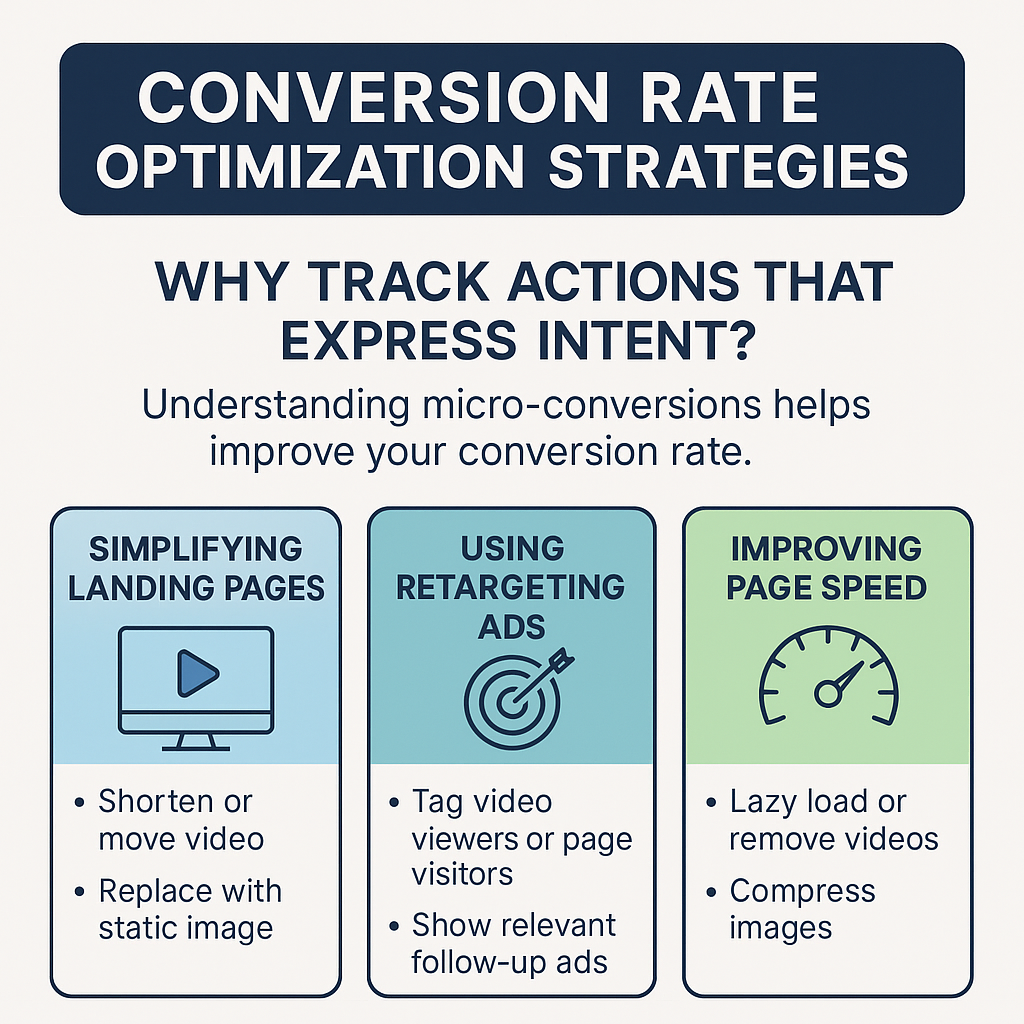
1. Simplify Landing Pages
Why it matters:
If Google Analytics shows that users drop off before watching even 25 percent of your homepage video, the content might be too long or placed in the wrong spot.
What to do:
Shorten the video to focus on the core value, move it higher on the page, or use autoplay with captions. If engagement remains low, consider replacing it with a high-impact static image or animation.
The result:
A faster, cleaner landing page that emphasizes the most effective content and helps users take action sooner.
Example:
A language learning provider offering AI-powered tutoring has a long demo video on its homepage. After setting up video tracking with Google Tag Manager and reviewing the data in Google Analytics, they notice most users drop off early.
If they replace the video with a short GIF that showcases how the platform works, it could better capture attention and potentially increase signups.
2. Retarget High-Intent Users
Why it matters:
Users who visit your pricing page, start a form, or watch most of a product video are showing high intent, even if they do not convert right away.
What to do:
Use Google Tag Manager to tag these actions and create custom audiences. Retarget these users with testimonial ads, limited-time offers, or reminders to complete their signup.
The result:
Your ads become more relevant and more likely to convert, since they are targeting people already familiar with your brand.
Example:
A SaaS company offering social media marketing software tracks users who click on the pricing page but do not complete the signup. By retargeting those users with testimonial ads and a free trial offer, they can re-engage warm leads and encourage more conversions.
3. Improve Page Speed
Why it matters:
Heavy videos, large images, and unnecessary animations can slow down your page, which increases bounce rates and hurts conversions — especially on mobile.
What to do:
Audit your site speed using tools like PageSpeed Insights. Use lazy loading for non-critical assets and remove elements that show low engagement based on your analytics. Compress images and streamline your code for better performance.
The result:
Faster pages lead to better user experience, improved SEO, and higher conversion potential.
Example:
A language learning platform offering live tutoring options includes several videos and animations on its homepage. After analyzing engagement through Google Analytics, they find that users are not interacting with these elements. If they remove the underperforming content and streamline the layout, they could improve page load speed and increase trial signups.
Conversion Rate Optimization Strategies
Implementing conversion rate optimization strategies requires more than just adjusting your headline or color scheme. By tracking micro-conversions and intent-based actions with tools like Google Tag Manager and analyzing the results in Google Analytics, you gain deeper insight into what drives user behavior.
From simplifying landing pages to retargeting high-intent users and improving page performance, these strategies allow you to optimize the user journey and increase your chances of turning visitors into customers.


